


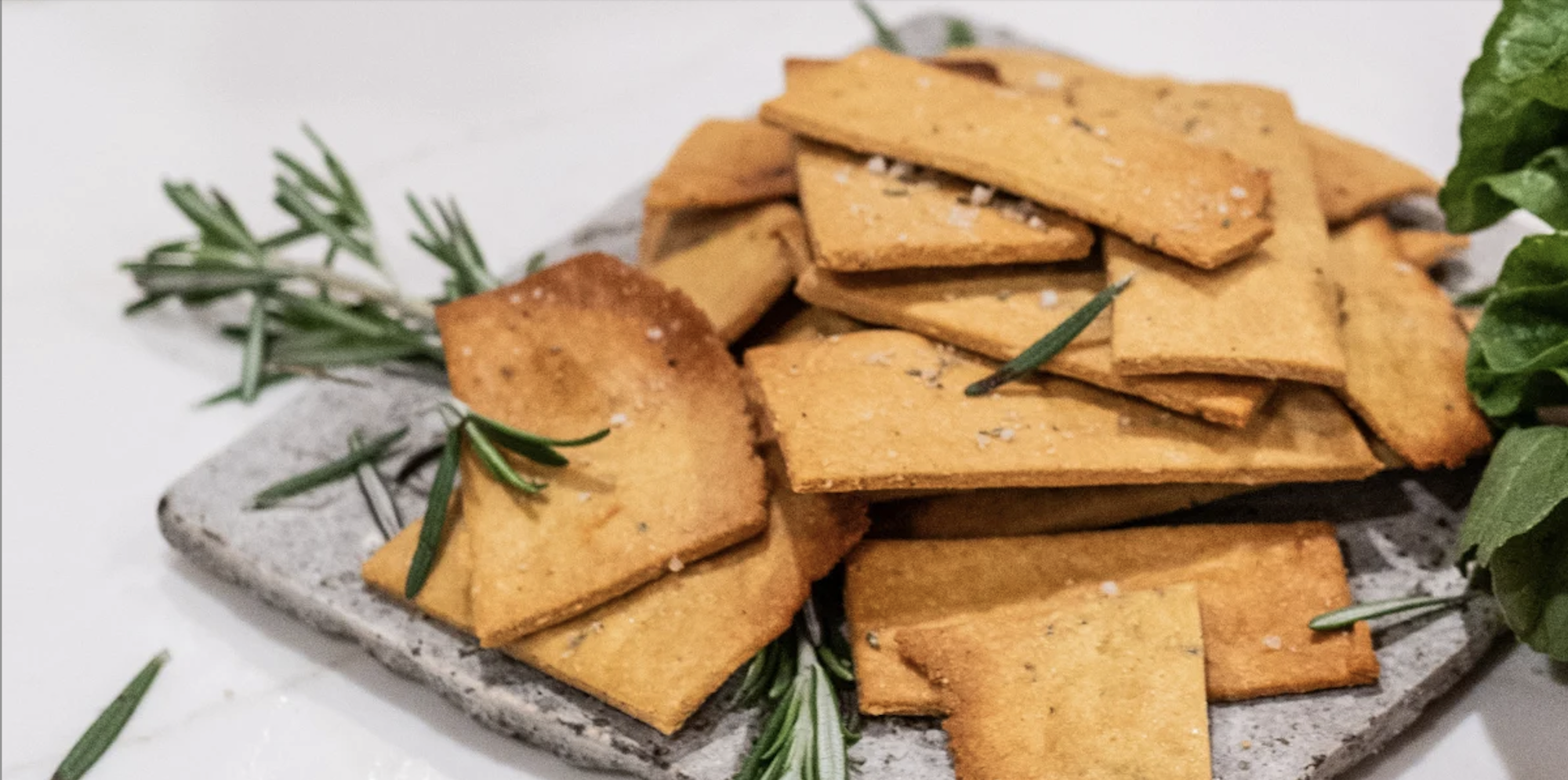
Warm, crispy, and quietly nourishing, these gluten-free chickpea crackers are proof that a short ingredient list can carry real flavor. Surprisingly easy, they come together in one bowl with no special skills required.
Chickpea flour brings an earthy, protein-rich base, while a generous pour of high-phenolic extra virgin olive oil does double duty, binding the batter and lending that signature peppery finish that highlights the olive oil's polyphenol content. A little fresh rosemary and good sea salt are all you need to round things out. They bake up crisp and snappable, and make a sturdy companion for dips, cheese, or a midday nibble straight off the pan.


These gluten-free chickpea crackers pair perfectly with Dr. Goren's favorite hummus and guacamole recipes!

5 Health Benefits of Chickpeas
Chickpeas have anchored Mediterranean and Middle Eastern kitchens for thousands of years, and modern nutrition science keeps confirming what those traditions understood intuitively. This is one of the better-studied legumes out there, with decades of independent research behind it. Beneath the mild, nutty flavor is a combination of plant protein, soluble fiber, resistant starch, and minerals that work together in ways that genuinely benefit everyday health. Here's what the evidence shows.
1. Gentler on blood sugar
Eat chickpeas in place of refined grains, and your blood sugar rises more gently afterward which is one of their best-documented effects. An independent 2023 meta-analysis of randomized controlled trials found that chickpea consumption reduced blood glucose compared with wheat and potatoes. Part of the mechanism is chickpeas' resistant starch and fiber, which slow digestion, making them a genuinely smart carbohydrate for steady energy.
2. Fiber that supports heart health
Chickpeas are rich in soluble fiber, the type consistently linked to healthier cholesterol. In an independent controlled study, adding chickpeas to the diet for at least five weeks produced small but significant reductions in total and LDL cholesterol. The effect is gentle rather than dramatic – but small, sustained improvements in cholesterol are exactly the kind that compound over a lifetime of good eating, and they're reinforced by the broader research on fiber-rich, Mediterranean-style diets.
3. Good for your gut
Chickpeas are a natural source of resistant starch and fiber, which pass into the colon and feed your beneficial gut bacteria. As those microbes ferment them, they produce short-chain fatty acids – compounds that nourish the cells lining the gut and support its integrity. Research shows chickpea fiber specifically enriches short-chain-fatty-acid-producing bacteria and supports a healthier gut microbial balance. A well-fed gut microbiome is increasingly understood as foundational to digestion, immunity, and overall health.
4. Protein and fiber that satisfy
A single cup of chickpea flour delivers around 20 grams of plant-based protein and 10 grams of fiber – roughly triple the fiber of white flour. That protein-and-fiber pairing is what makes chickpeas so satisfying, helping you feel full longer and snack with more intention.
5. Everyday energy from iron and folate
Chickpeas are a real source of both iron and folate – two nutrients your body relies on to build healthy red blood cells and carry oxygen through the blood. A cup of cooked chickpeas covers a meaningful share of your daily needs for each, offering foundational support for steady, everyday energy.
Frequently Asked Questions
Are chickpea crackers healthy?
Yes. Chickpea crackers are made from chickpea flour, which is naturally high in plant protein and fiber and lower in refined carbohydrates than wheat-based crackers. Made simply, with chickpea flour, olive oil, and salt, they're a wholesome, satisfying snack that supports steady energy and fullness.
Is chickpea flour gluten-free?
Chickpea flour is naturally 100% gluten-free, since it's made purely from ground chickpeas with no wheat, barley, or rye. If you have celiac disease or a severe sensitivity, choose a flour labeled certified gluten-free to rule out cross-contamination during processing.
Is chickpea flour good for blood sugar?
Chickpea flour has a gentler effect on blood sugar than refined wheat flour. Its fiber and resistant starch slow digestion, and independent research on chickpeas and pulses consistently shows a smaller post-meal glucose rise — making it a smart swap for steadier energy.
Is chickpea flour healthier than regular flour?
Compared with refined white flour, chickpea flour offers more protein, more fiber, and more minerals like iron and folate, with a gentler blood-sugar impact. It's not a cure-all, but for most everyday baking and snacking it's a genuinely more nourishing choice.
What do chickpea crackers taste like?
Chickpea crackers have a mild, nutty, slightly earthy flavor with a satisfying crisp snap. Finished with peppery high-phenolic extra virgin olive oil, fresh rosemary, and sea salt, they turn savory and aromatic — sturdy enough to hold up to hummus, guacamole, and other dips.
How long do homemade chickpea crackers last?
Stored in an airtight container at room temperature, homemade chickpea crackers keep for up to a week. If they soften, a few minutes back in a warm oven crisps them right up again.

Why we recommend "The Governor, Limited Edition"
Looking for a potent high-phenolic olive to give your wellness a boost?
This award-winning early harvest olive oil is known as one of the most exceptional olive oils in the world and has been rigorously tested by scientists for treatment of various diseases, including hypertension, cancer, and Alzheimer’s.
More Recipes
View all-

No-bake Tahini Chocolate Squares (Gluten-free and Vegan)
Flourless, dairy-free, gluten-free, and sweetened with dates. These rich tahini chocolate squares are a no-bake dessert built in layers of sweet, nutty, crunchy, and salty.
No-bake Tahini Chocolate Squares (Gluten-free and Vegan)
Flourless, dairy-free, gluten-free, and sweetened with dates. These rich tahini chocolate squares are a no-bake dessert built in layers of sweet, nutty, crunchy, and salty.
-

Celery and Date Salad with Pecans and Pecorino
This Celery and Date Salad is a 20-minute, no-cook salad of crisp celery, chopped Medjool dates, and chopped pecans, dressed in lemon juice, date syrup, and high-phenolic extra virgin olive oil, and finished with broad slices of Pecorino Romano.
Celery and Date Salad with Pecans and Pecorino
This Celery and Date Salad is a 20-minute, no-cook salad of crisp celery, chopped Medjool dates, and chopped pecans, dressed in lemon juice, date syrup, and high-phenolic extra virgin olive oil, and finished with broad slices of Pecorino Romano.
-

Gluten-Free Chickpea Crackers
Warm, crispy, and quietly nourishing, these gluten-free chickpea crackers are proof that a short ingredient list can carry real flavor. Surprisingly easy, they come together in one bowl with no special skills required.
Gluten-Free Chickpea Crackers
Warm, crispy, and quietly nourishing, these gluten-free chickpea crackers are proof that a short ingredient list can carry real flavor. Surprisingly easy, they come together in one bowl with no special skills required.


- Choosing a selection results in a full page refresh.
- Opens in a new window.